Exploring the complexities of behavior change through personal, real-world experiments.

Building Anxiety Resilience With Pink Shoes
Social anxiety can make even leaving the apartment a struggle. Once outside, the tendency is to blend into the surroundings as much as possible, to the extent that even carrying a bag can feel like drawing too much attention.
Bright pink shoes became the basis of a behavioral experiment for two reasons: their contrast against the predominantly gray and dark urban environment in the winter months, and the relatively low consequences (for example not a work related activity) should the experiment not go as planned.
To reduce barriers to completion, the experiment was embedded into an everyday social activity, meeting a friend for coffee, rather than simply walking through the city without a particular purpose. The presence of a friend also offered a potential safety net should the emotional intensity of the experience become overwhelming. Although the perfect weather (dark, foggy and gray) did increase the pressure to start the experiment.
Through repeated exposure over several days, a noticeable shift in the emotional experience emerged. Surprisingly quickly, wearing pink shoes began to feel almost indistinguishable from an ordinary walk through the city. With repetition, what initially felt like an emotional roller coaster gradually turned into a leisurely drive along a quiet road. The increase is self-efficacy has, as the initially intended, spilled over into other areas of life.
Unspecified Date
Tackling Perfectionism
Perfectionism has found its way into my German pronunciation skills. Despite a good command of the language, the awareness of even minor mistakes while speaking can create enough emotional discomfort to avoid conversations altogether. Speaking German becomes a stressful experience, often accompanied by extensive mental preparation for conversations that, in everyday life, tend to happen spontaneously.
An interesting observation was that conversations became considerably more fluent when speaking with familiar people. As the perceived social pressure diminished, so did the influence of perfectionism. This suggested that the barrier was not primarily linguistic, but psychological.
An experiment designed around a 15-minute daily morning conversation sessions with ChatGPT has been introduced. The structure was intentional: keeping the sessions short reduced the barrier to participation, while practicing in the morning rather than in the evening created a greater sense of preparedness for spontaneous interactions throughout the day.
Unexpected experiment benefits emerged. The mere awareness of me actively addressing the issue through an experiment appeared to alleviate some of the psychological burden associated with speaking German.
3.11.26
Going All In on Small Talk
Joining a new coworking space with a surprisingly strong sense of community created an interesting paradox: the desire to become part of that community, combined with the fear of saying something that might compromise that very opportunity. Even the seemingly trivial interactions that naturally occur in shared kitchens and communal areas became a challenge. Small talk, often the starting point for building social connections, became a barrier in itself.
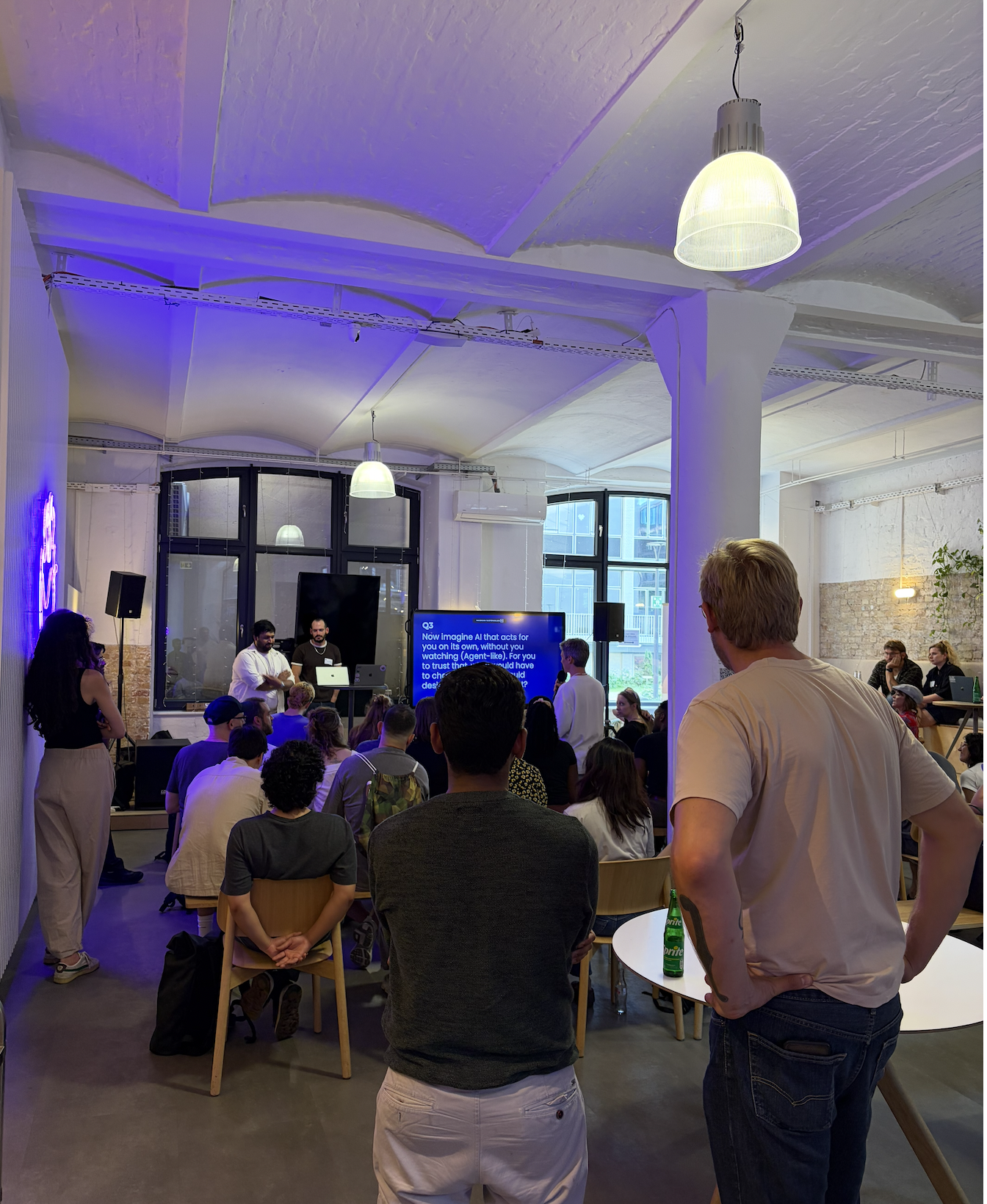
Around the same time, an opportunity emerged at an event exploring the intersection of psychology and design. The organizer was looking for volunteers to help with various aspects of the events, including checking in attendees. With 60 to 80 people attending each event, this presented an opportunity to engage in numerous brief social interactions within a structured environment. The nature of the task made small talk feel more organic and less forced: greeting people, scanning their tickets, handing out name tags, and welcoming them to the event.
What initially felt awkward gradually became something resembling a dance, sensing the rhythm of each interaction, exploring whether a small joke might be well received or whether a simple, warm greeting would be more appropriate.
Although the experiment didn't resolve the small-talk barrier at the coworking space, its effects extended beyond the events themselves. Initiating conversations with strangers in other social settings became easier, as did engaging in conversations initiated by others. So still working on that small-talk in the coworking issue.
14.07.26

An Evening at a Bar, Alone
Social anxiety can make attending events alone particularly challenging, often resulting in missed opportunities for otherwise enjoyable experiences, such as visiting an art gallery or attending a cultural event.
One evening, attending an organized visit to an artist’s studio required overcoming a considerable amount of anxiety. Walking through the door and joining a small group of strangers was already a meaningful accomplishment. On the way home, while reflecting on the experience, an empty seat at the counter of a passing bar presented an unexpected opportunity to further explore the boundaries of anxiety resilience.
Two factors appeared to facilitate this spontaneous decision: the sense of confidence gained from attending the art event and interacting with strangers, and having an e-reader at hand. Combining an anxiety-inducing activity (visiting a bar alone), with an intrinsically enjoyable one (reading a book) lowered the perceived barrier to engagement.
The experience was followed by an almost euphoric sense of confidence and resilience. Yet the intensity of that emotional response also suggested that this was only the beginning of a series of experiments. The longer-term ambition is not necessarily to experience a sense of accomplishment , but rather for such experiences to become emotionally unremarkable, an ordinary part of everyday life.
24.05.26